ADA Compliant Portable Toilet Rental: Why Accessible Routes Issue
@franciscohmzj078
When people think about an ADA compliant mobile toilet leasing, they typically visualize the system itself. They ask whether the stall is bigger, whether it has grab bars, whether it is classified correctly, whether it counts as an ada available mobile restroom. Those are essential inquiries, but they are just part of the job.
The path to the system matters just as much.
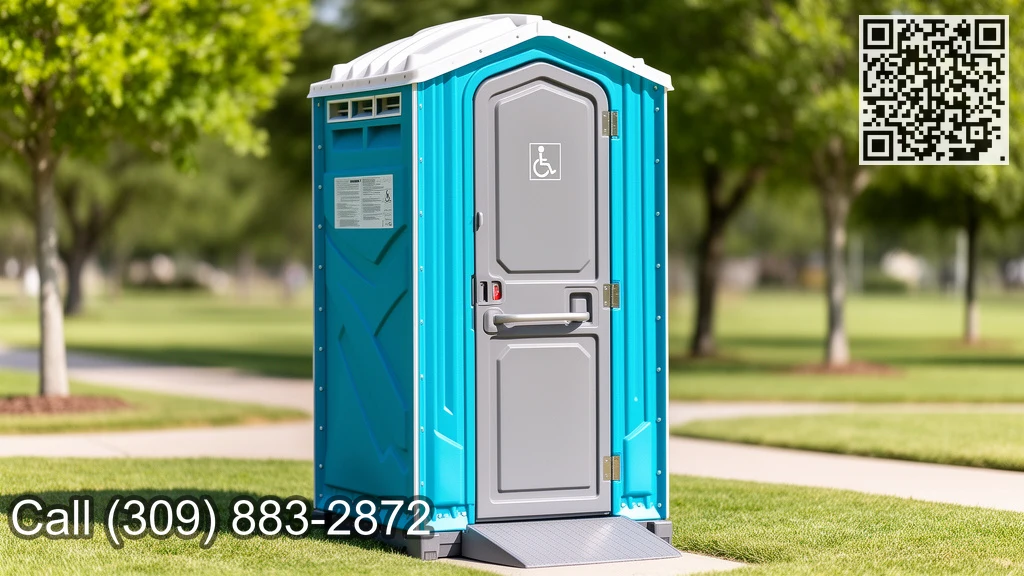
I have seen this missed out on in ways that are understandable and hard to excuse. A rental business delivers an ada certified portable toilet. The event team really feels happy since they inspected package and purchased the appropriate model. After that the unit obtains positioned at the much side of a field, behind a row of basic commodes, over soft ground, or at the end of a course with a lip or incline that makes independent gain access to tough or impossible. On paper, there is an easily accessible system on site. In method, a guest still can not use it with dignity.
That space between existence and usability is where most real-world access issues live.
A certified system is insufficient if the course fails
The regulating federal requirement for this issue in the United States is the 2010 ADA Specifications for Accessible Style, as applied via the Department of Justice and interpreted by the Gain access to Board. For mobile devices at momentary events and comparable setups, accessibility is not restricted to the interior of the restroom. The available portable commode needs to also be attached by an available route and entryway. If a ramp or touchdown is needed, it needs to fulfill the ADA's technical requirements.
That might sound noticeable, but in the area it gets missed all the time because course preparation frequently happens late. A person selects the commode financial institution location based upon solution truck accessibility, occasion flow, secure fencing, or available open space. Only afterwards do they consider the ada mobile washroom. By then, the most convenient place might already be the worst area for accessibility.
An ada certified portable toilet is intended to function as part of a complete customer experience. A person has to be able to approach it, enter it, utilize it, and leave it without facing barriers that the criterion is meant to remove. If the course is damaged, the restroom is functionally damaged too.
What the ADA really expects in this setting
For clusters of portable single-user bathroom devices, at least 5 percent of the units in each cluster must come. The Access Board has made clear that this applies also at short-lived events. That factor matters due to the fact that some coordinators still presume short-lived means flexible. Momentary does not mean exempt here.
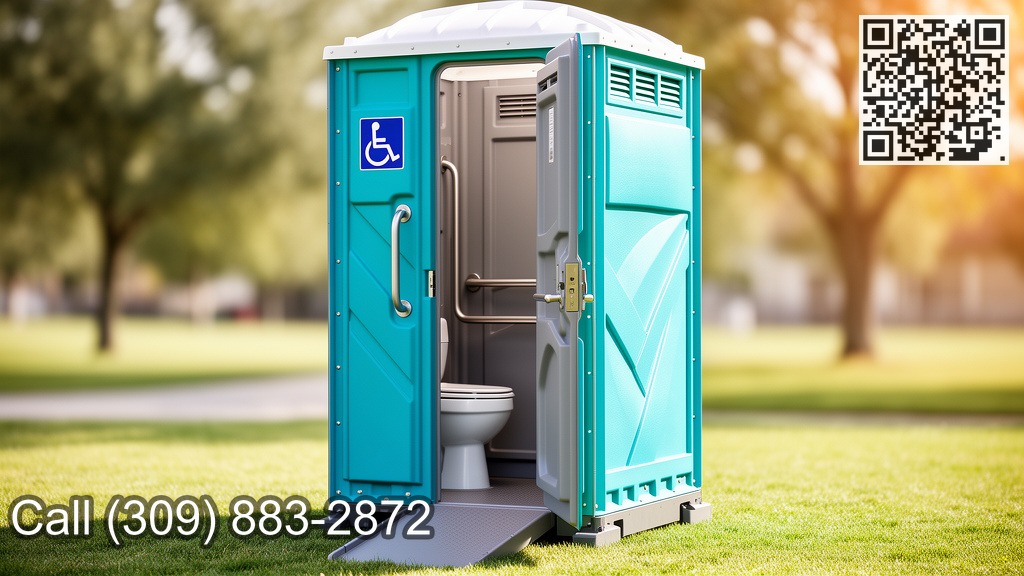
The available system need to be understood the International Icon of Availability. Inside and at the entrance, the toilet room still has to meet suitable technological requirements. Those include transforming area, fixture clearances, door navigating clearances, and the pertinent grab-bar and water-closet clearance policies. Simply put, an ada-compliant portable commode is not just a wider covering. It is a system created around actual use by individuals with disabilities.
And still, also that is not the complete tale. The route to the device and the entry right into it become part of the need. That is what turns a compliant piece of equipment into a compliant installation.
There is one subtlety worth keeping in mind due to the fact that it causes complication. The ADA standards have traditionally treated some portable toilet systems at construction sites differently when those systems are used specifically by building and construction workers. That slim distinction should not be extended past its truths. For general portable commode rentals, consisting of public events and comparable short-term settings, the accessible-unit need remains firmly in place.
Why obtainable courses are where good objectives fail
Most access mistakes with mobile commodes do not originate from open negligence. They come from fragmented planning. One group deals with website layout. An additional deals with rentals. An additional deals with operations. No one owns the route from the drop-off point to the door.
That path can stop working in subtle ways. A positioning might look close on a map however be separated by uneven ground. A course may practically exist but require someone to method from the side or navigate around congested barriers. An entry may be obtainable only by going across a change that works penalty for foot website traffic yet not for a wheelchair customer. A ramp might be included with great intents however without the landings or technological compliance the ADA requires.
These are not tiny information. They are the distinction in between access and exclusion.
There is also a human side that often gets lost in conformity talk. If a visitor, attendee, employee, or family member needs to ask for aid just to get to the washroom, the problem is already larger than logistics. Bathroom access is fundamental, personal, and time-sensitive. People must not need to negotiate for it, wait on someone to move barriers, or search for a staff member that recognizes where the "unique device" was placed.
The route becomes part of dignity
That might seem like soft language for a technological issue, yet it is not. Self-respect is what the technological rules protect.
Think about https://connereceo571.theburnward.com/ada-mobile-bathroom-rental-checklist-for-accessibility-compliance the difference between these two setups.
In the first, an ada handicap accessible portable bathroom is put beside the primary bank of devices, on a route individuals are currently utilizing, with the entry obtainable without added assistance. It is identified appropriately, easy to find, and integrated into the website like any type of other vital service.
In the 2nd, the ada portable commode is available just if somebody crosses a rough temporary surface area, goes around the rear of a fenced area, and comes close to an entrance from an uncomfortable angle. There might be a certified model on site, however the individual that requires it is still being divided from every person else.
The law addresses accessibility, yet individuals experience inclusion.
Temporary occasions do not get a pass
One of one of the most persistent misconceptions in portable sanitation is that short-term setups are somehow judged by a looser criterion. They are not, at the very least not in the general sense several organizers think. The Access Board's advice makes clear that the 5 percent accessible-unit need for clusters applies also at short-term events.
That has useful consequences. A weekend break festival, a neighborhood charity event, a reasonable, a pop-up activation, a short-term venue development, or an exterior party still needs to think about available positioning. Short period does not remove the requirement for an accessible route. If anything, momentary websites require more interest due to the fact that they are more probable to be set up rapidly on imperfect ground with improvised flow patterns.
I have actually found that temporary sites are likewise where ease of access gets dealt with as a late-stage modification. A person realizes the day before opening that they require an ada compliant portable bathroom service, so the distributor sends one, and every person presumes the problem is resolved. Then, however, the website format may already be fixed. The obtainable system ends up in whatever space is left.
That is a planning failing, not a product failure.
What occupants and site managers need to validate before placement
If you are organizing ada compliant mobile bathrooms, the crucial concern is not just "Did we rent out the ideal device?" It is "Can an individual in fact get to it and utilize it under real problems?"
A brief pre-placement check normally captures the largest errors:
- Confirm how many units remain in each collection and whether at least 5 percent of that collection will be accessible.
- Make sure the accessible unit is plainly related to the International Icon of Accessibility.
- Walk the route to the entry, not simply the decline zone, and seek barriers that would disrupt easily accessible travel.
- If a ramp or landing is required, treat it as an ADA conformity item, not an improvised add-on.
- Verify that the unit's entry and interior problems sustain the called for maneuvering and clearances.
That list sounds straightforward due to the fact that it is straightforward. The difficulty is doing it early enough that placement can still be changed.
Clusters matter more than lots of people realize
The need puts on each collection of portable single-user commode devices, not just to the complete number rented throughout an entire occasion or site. That information matters in the field because coordinators commonly spread systems into different financial institutions for convenience.
Imagine an occasion with several bathroom locations. If there is one huge central collection and a few smaller satellite clusters, accessibility can not be fixed by filling all easily accessible systems right into the main location while leaving the smaller sized collections without accessibility. The 5 percent policy applies at the collection degree. Even without obtaining lost in math, the takeaway is clear: each organizing requires its very own ease of access review.
This is one of those issues that often tends to amaze individuals who thought a sitewide total was enough. It usually is not.
The inside requirements are not optional details
There is a propensity in rental conversations to utilize terms like ada portable toilet and ada-compliant mobile restrooms as if they merely describe a larger design. The ADA requirements are extra particular than that.
The device have to satisfy suitable toilet-room technological demands. That consists of turning area, component clearances, door navigating clearances, and relevant guidelines for grab bars and water-closet clearances. These are not cosmetic features. They influence whether the individual can position, transfer, and operate the space.
That issues when a client stores on label alone. Not every huge portable bathroom is necessarily an ada certified mobile bathroom. Not every device marketed delicately as easily accessible will please the technological requirements that govern compliant setups. The distinction is easy to miss out on if the discussion is driven totally by inventory names instead of real compliance needs.
This is why skilled customers have a tendency to ask harder inquiries. They would like to know not just what the unit is called, but whether it is being given and installed in such a way that aligns with ADA requirements.
The route outside the door usually determines whether the system operates at all
A portable unit can be completely certified as manufactured and still fail the customer due to where and just how it is put. That is the uneasy reality in numerous access disputes.
The path can damage down prior to an individual even gets to the entrance. The entrance can damage down if approach room is endangered. A ramp can break down if it exists in name only however does not satisfy technical requirements. Once that occurs, it does not matter just how excellent the interior turning space is. The user is quit before those functions end up being relevant.
I have actually seen groups concentrate heavily on the spec sheet and practically not at all on approach problems. That is easy to understand due to the fact that item requirements are very easy to paper. Course use needs judgment, site awareness, and in some cases a readiness to challenge a practical format. However if you are attempting to provide a genuinely functional ada certified easily accessible mobile restroom, that initiative is nonnegotiable.
Accessibility is becoming part of a broader conformity culture
There is a broader context here too. ADA compliance is not shrinking right into a particular niche worry. It is ending up being much more noticeable throughout markets, including digital access and public service distribution. Recent federal support affecting web and mobile availability deadlines for state and city government entities is one indicator of that broader setting. The specifics of digital conformity are various from portable sanitation, but the functional lesson is similar: ease of access expectations are energetic, developing, and increasingly hard to treat as an afterthought.
For site drivers, place managers, communities, institutions, and occasion manufacturers, that must be a wake-up phone call. Availability is no more something you attend to just when somebody complains. It becomes part of responsible operations. When individuals search for an ada mobile bathroom service, they are usually attempting to address more than a procurement problem. They are trying to satisfy a legal responsibility and a fundamental criterion of care.
Common judgment calls that are entitled to even more attention
Not every site is simple. Some locations are constricted, sloped, crowded, or short-lived in such a way that makes every placement incomplete. That is specifically why judgment matters.
Here are a few situations where experienced planning makes a distinction:
- A device placed near service access may be easier to preserve, but if that path is less accessible for individuals, comfort for pumping ought to not instantly win.
- A remote edge may really feel much less visually intrusive, but relocating the ada obtainable mobile washroom far from the main flow can create isolation and path problems.
- A last-minute ramp may feel like a solution, yet if it does not adhere to ADA technical needs, it can develop incorrect self-confidence rather than access.
- Spreading systems equally around a site can assist crowd control, but each collection still requires its very own obtainable thinking.
- Labeling a device as accessible aids people find it, yet signage can not compensate for an unattainable path.
What stands out in these instances is that availability rarely stops working due to the fact that nobody cared. It fails because an additional top priority silently overrode it. Service, appearances, crowd flow, security, or speed took the lead, and accessibility obtained pressed into whatever space remained.
Language matters, however efficiency issues more
The market makes use of a great deal of overlapping phrases: ada compliant portable commodes, ada-compliant mobile washrooms, ada certified accessible mobile restrooms, ada mobile restroom, ada-compliant portable toilet. The majority of customers are merely searching for the right thing, and search language often tends to blur distinctions. That is normal.
But the safest means to think of it is this: the expression needs to describe a restroom setup that really works under ADA policies, not just a design name in a brochure. A compliant installment consists of the appropriate number of accessible devices in each cluster, proper recognition, the needed interior and entrance problems, and an available path. Overlook any one of those pieces and the phrase begins to lose its meaning.
That is why easily accessible routes deserve so much focus. They are usually the least noticeable part of the configuration process and one of the most definitive component of the individual experience.
Planning very early is the most convenient kind of compliance
If there is one practical lesson I would press on any type of coordinator, it is to take care of availability before the website plan solidifies. Once secure fencing, supplier booths, phases, service lanes, and group channels are repaired, the bathroom area ends up being much more challenging to remedy. Early planning gives you choices. Late planning provides you compromises.
This is specifically true when numerous clusters are involved. It is much easier to design each commode area with accessibility in mind than to retrofit one available unit right into a website that was set out for rate alone. When teams do this well, it hardly feels remarkable. The accessible washroom exists, plainly significant, and reachable. Nobody needs to improvisate. No one needs to apologize.
That is just how it must feel.
The actual test is simple
An individual coming close to an ada compliant mobile bathroom should not have to wonder whether the path is suggested for them. They should not have to ask authorization, await assistance, or try a route that others can bypass effortlessly. If the device is really available, the route will claim so prior to the sign does.
That is the heart of this concern. An ada certified portable toilet leasing is not just regarding buying the proper device. It has to do with putting that system where availability is actual. The requirements acknowledge that truth. Excellent operators do as well. And for the people who rely upon those bathrooms, the difference is immediate, useful, and deeply personal.
 Ask ChatGPT
 Ask Grok
 Ask Perplexity
 Ask Claude
 Ask Google AI
 Ask You